.png)
.png)


Assam vs Darjeeling vs Ceylon Tea: Which One Should You Choose?
- Feb 16
- 5 min read
When exploring the world of premium black teas, three names consistently dominate the conversation — Assam, Darjeeling, and Ceylon.
If you are searching for the best black tea in India, or trying to understand the true difference between Assam and Darjeeling tea, you’re not alone.
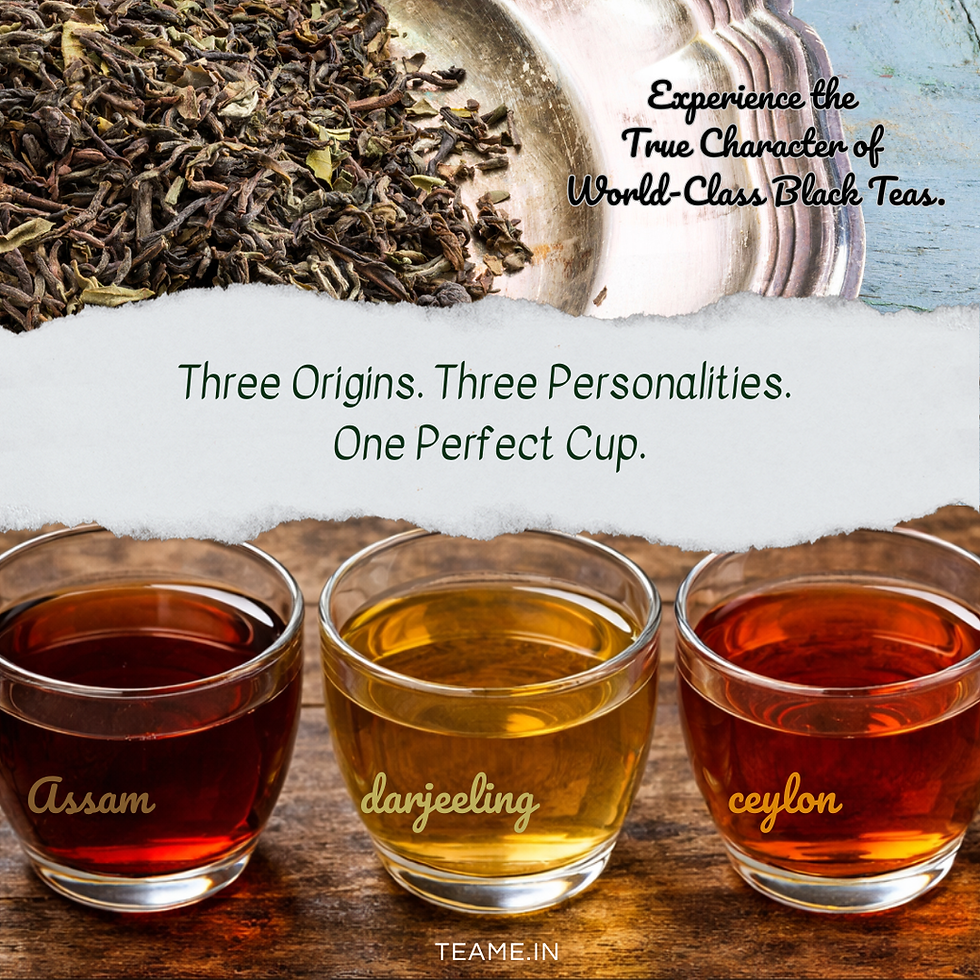
These three teas come from distinct terroirs, climates, elevations, and processing traditions — and each offers a completely different experience in the cup.
At Tea & Me (teame.in), we curate high-grade loose leaf teas from renowned tea-growing regions, selecting only premium long-leaf batches that reflect authentic character, freshness, and refinement.
This guide will help you clearly understand:
Assam and Darjeeling tea differences
Ceylon tea vs Assam comparison
Flavor profiles
Brewing techniques
Which tea suits your taste preference
Let’s dive deeper.
Assam and Darjeeling Tea: Understanding the Key Differences
The most searched comparison in Indian tea culture is between Assam and Darjeeling tea.
Both are grown in India.
Both are black teas.
Yet they are dramatically different.
The difference lies in:
Elevation
Climate
Soil composition
Leaf variety
Oxidation style
Origin & Geography
Assam Tea
Region: Assam, Northeast India
Elevation: Low altitude
Climate: Humid, tropical
The hot, rainy conditions produce thick leaves rich in tannins — responsible for Assam’s strength and boldness.
Darjeeling Tea
Region: Darjeeling, West Bengal
Elevation: 2,000+ meters (Himalayan foothills)
Climate: Cool, misty
The high altitude slows leaf growth, creating delicate, aromatic compounds unique to Darjeeling.
Flavor Profile Comparison
Feature | Assam | Darjeeling |
Body | Full-bodied | Light to medium |
Aroma | Malty, strong | Floral, muscatel |
Finish | Deep, brisk | Bright, delicate |
Liquor Color | Dark amber | Golden |
Milk Compatibility | Excellent | Not recommended |
In simple terms:
Assam = Power & richness
Darjeeling = Elegance & complexity
At Tea & Me, we source premium long-leaf Assam varieties that deliver strength without bitterness — and high-grade Darjeeling that preserves clarity and muscatel nuance.
Ceylon Tea vs Assam: Brightness vs Strength
When comparing Ceylon tea vs Assam, the difference is about character and texture.
Ceylon Tea
Origin: Sri Lanka
Body: Medium
Character: Bright, brisk, slightly citrus
Ceylon tea is grown at varying elevations, producing teas ranging from light and lively to slightly stronger mid-grown varieties.
Flavor Profile
Crisp
Refreshing
Clean copper liquor
Subtle citrus undertones
Ideal For
Lemon tea
Iced tea
Light black tea
Everyday balanced cup
Assam vs Ceylon – Key Contrast
Feature | Assam | Ceylon |
Strength | Very strong | Medium |
Mouthfeel | Heavy, dense | Lively, crisp |
Milk Friendly | Yes | Optional |
Aftertaste | Malty depth | Bright finish |
If you enjoy robust breakfast tea with milk — Assam wins.
If you prefer a clean, refreshing cup — Ceylon stands out.
At Tea & Me, our selected Ceylon OP varieties are chosen for clarity, aroma, and brightness — not mass-market harshness.
What Makes These Teas So Different?
Understanding terroir helps explain flavor differences.
1. Elevation
Assam: Low elevation → faster leaf growth → stronger tannins
Darjeeling: High elevation → slower growth → complex aromatics
Ceylon: Mixed elevations → versatile profiles
2. Leaf Variety
Assam uses Camellia sinensis var. assamica (large leaf).
Darjeeling uses Chinese varietals (smaller leaves).
This botanical difference heavily impacts body and taste.
3. Processing Style
All three are oxidized black teas, but:
Assam is often processed for boldness.
Darjeeling emphasizes aroma retention.
Ceylon balances briskness and brightness.
Premium sourcing and proper leaf grading make a significant difference — something Tea & Me prioritizes.
Brewing Guide for Perfect Flavor Extraction
Even the best black tea can taste disappointing if brewed incorrectly.
Assam Tea Brewing
1 teaspoon per 180 ml water
Water temperature: 95–100°C
Steep: 3–5 minutes
Add milk if desired
Tip: Over-steeping increases bitterness.
Darjeeling Tea Brewing
1 teaspoon per 180 ml water
Water temperature: 85–90°C
Steep: 2–3 minutes
No milk
Tip: Use slightly cooler water to preserve floral notes.
Ceylon Tea Brewing
1 teaspoon per 180 ml water
Water temperature: 90–95°C
Steep: 3–4 minutes
Enjoy plain or with lemon
Tip: Excellent for cold brewing as well.
Tea & Me packs teas in freshness-sealed packaging to preserve volatile aromatics — critical for premium loose leaf teas.
Which Tea Is the Best Black Tea in India?
There is no universal “best.”
The right tea depends on your palate.
Choose Assam if you want:
✔ Bold, malty strength
✔ Strong morning tea
✔ Milk-based chai
Choose Darjeeling if you want:
✔ Floral complexity
✔ Afternoon elegance
✔ No milk
Choose Ceylon if you want:
✔ Bright refreshment
✔ Balanced body
✔ Versatility
The best black tea in India is the one that aligns with your preference — but quality sourcing makes all the difference.
Why Quality Matters More Than Region
Many people assume region alone defines quality.
Not true.
Quality depends on:
Whole leaf grading
Fresh harvest selection
Proper storage
Moisture control
Packaging
Mass-market teas often contain broken leaves or dust, resulting in flat or harsh flavor.
Tea & Me focuses on premium long-leaf batches that maintain integrity, aroma, and smooth finish.
That’s the difference between commodity tea and curated tea.
How to Identify Premium Loose Leaf Tea
When purchasing Assam, Darjeeling, or Ceylon, check for:
✔ Visible whole leaves
✔ Natural aroma
✔ Clear liquor
✔ No excessive dust
✔ Origin transparency
Tea & Me sources directly from reputed estates and ensures controlled storage to maintain freshness.
Why Premium Buyers Prefer Loose Leaf Over Tea Bags
Loose leaf tea:
Offers better flavor extraction
Contains whole leaves
Preserves natural oils
Allows multiple infusions
If you are investing in premium tea, loose leaf is essential.
Tea & Me – Premium Black Teas Curated with Precision
At Tea & Me (teame.in), our philosophy is simple:
Quality over quantity.
We do not compete on lowest price.
We compete on authenticity, leaf integrity, and premium experience.
Our collection includes:
Premium Assam long leaf
High-grade Darjeeling selections
Carefully sourced Ceylon OP
Each batch is selected for character, freshness, and refined taste — designed for discerning tea drinkers.
Frequently Asked Questions
Which is stronger: Assam or Darjeeling tea?
Assam is stronger and more malty. Darjeeling is lighter and floral.
Is Ceylon tea stronger than Assam?
No. Assam is typically heavier and more robust. Ceylon is brisk and medium-bodied.
Can Darjeeling tea be consumed with milk?
Traditionally, Darjeeling is consumed without milk to preserve its delicate muscatel notes.
Which tea is best for milk chai?
Assam is ideal due to its strength and full body.
Which is the best black tea in India?
The best black tea depends on personal preference — but premium loose leaf quality makes a significant difference.
Final Thoughts
Assam. Darjeeling. Ceylon.
Three origins. Three personalities. Three completely different tea experiences.
Understanding the difference between Assam and Darjeeling tea — and how Ceylon tea vs Assam compares — empowers you to choose intentionally.
If you value premium quality, authentic origin, and refined taste, explore the curated collection at Tea & Me (teame.in) and experience these iconic teas the way they were meant to be enjoyed.


Comments