.png)
.png)


Pu Erh Tea vs Black Tea: Understanding What Makes Them Fundamentally Different
The world of premium tea extends far beyond the familiar categories of black, green, and oolong tea. Among tea enthusiasts, few subjects generate as much discussion as Pu Erh tea and how it compares to traditional black tea.
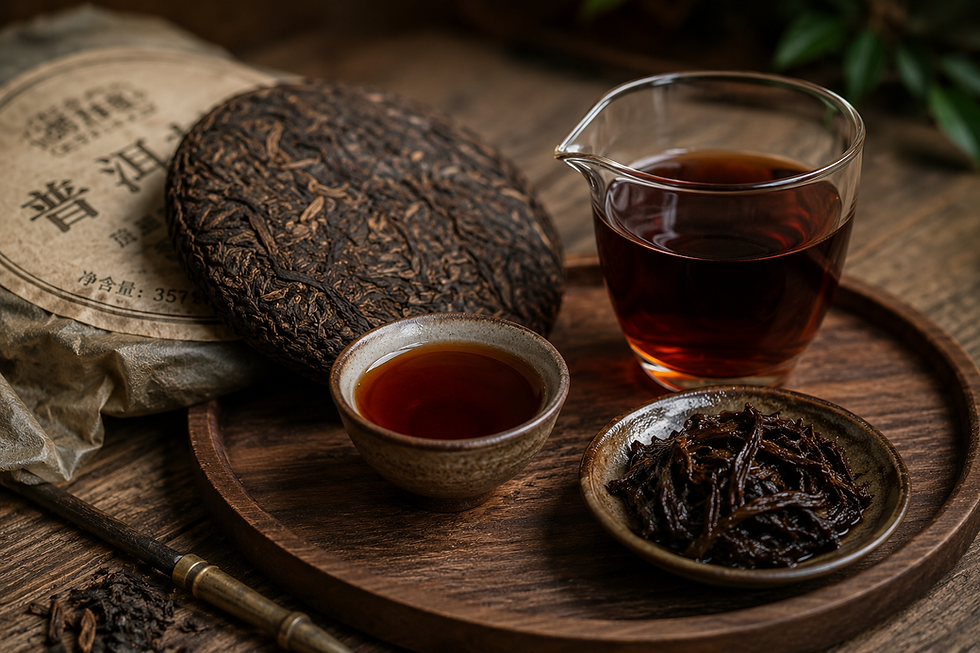
For many Indian tea drinkers, the journey begins with Assam, Darjeeling, Nilgiri, or Ceylon black teas. Yet after years of exploring these classics, a growing number of tea connoisseurs discover Pu Erh tea—a category that offers an entirely different experience.
The comparison between Pu Erh tea and black tea is not simply about flavour. It is a comparison between two very different philosophies of tea production, maturation, storage, and appreciation.
What Exactly Is Pu Erh Tea?
Pu Erh tea originates from Yunnan Province in China and is unique because it continues to evolve after production.
Unlike conventional teas that are consumed for freshness, Pu Erh is intentionally produced with aging potential. Certain Pu Erh teas may mature for years or even decades, gradually developing deeper and more complex characteristics.
This concept alone separates Pu Erh from nearly every black tea available in the market.
You may also encounter the term Pu Er Cha, which is simply the Chinese name for Pu Erh tea. In Mandarin, "Cha" means tea, making Pu Er Cha and Pu Erh tea essentially the same product. Tea enthusiasts, collectors, and specialty tea retailers often use both terms interchangeably, particularly when discussing traditional Chinese tea culture, vintage tea cakes, and aged tea collections.
Why Pu Erh Tea Is Not Simply Another Black Tea
Many first-time buyers assume that Pu Erh tea is a type of black tea because of its dark liquor and rich flavour.
Technically, it belongs to an entirely different category.
Black tea undergoes complete oxidation during manufacturing and remains relatively stable afterward.
Pu Erh tea, particularly Sheng (Raw) Pu Erh, continues transforming through microbial and oxidative processes long after production.
In simple terms:
Black tea reaches its intended character at manufacture.
Pu Erh tea continues developing its character during storage.
This distinction is one of the reasons Pu Erh has developed a global collector culture.
The Role of Time
A premium Assam black tea harvested today will taste largely the same next year if stored properly.
A Pu Erh tea harvested today may taste noticeably different after five years, ten years, or even twenty years.
For collectors and enthusiasts, this evolving nature creates fascination similar to:
Fine wine
Single-origin coffee maturation studies
Whisky aging
Specialty chocolate development
Tea becomes a living product rather than a static one.
Understanding Sheng and Shu Pu Erh
Sheng (Raw) Pu Erh
Sheng Pu Erh is the traditional style.
When young, it may display:
Floral notes
Fruit-like brightness
Mineral complexity
Structured bitterness
Over years of aging, these characteristics gradually transform into smoother, deeper, and more layered profiles.
Shu (Ripe) Pu Erh
Developed during the 1970s, Shu Pu Erh undergoes an accelerated fermentation process.
It typically offers:
Earthy character
Smooth texture
Dark liquor
Low perceived bitterness
For Indian tea drinkers transitioning from strong black teas, Shu Pu Erh often serves as an approachable introduction.
Unlike conventional black tea, Pu Er Cha is often purchased not only for immediate consumption but also for aging and long-term appreciation. This unique characteristic has helped create a dedicated global community of collectors and enthusiasts.
Why Experienced Tea Drinkers Explore Pu Erh
The attraction is not necessarily flavour alone.
Many enthusiasts are drawn to three unique aspects:
1. Vintage Potential
Few tea categories offer the possibility of exploring teas from different production years.
Collectors may compare:
2015 harvest
2018 harvest
2021 harvest
Each vintage develops its own personality.
2. Terroir Appreciation
Just as Darjeeling estates produce distinct profiles, Pu Erh enthusiasts study individual mountains and villages.
Small geographic differences can create remarkably different experiences.
3. Session Longevity
A quality black tea may produce several infusions.
A well-made Pu Erh can often provide numerous enjoyable infusions, allowing drinkers to observe how flavours evolve throughout a session.
Pu Erh Tea and the Emerging Indian Premium Tea Market
India has traditionally been a producer nation rather than a Pu Erh-consuming nation.
However, consumer behaviour is changing.
Several trends are contributing to rising interest:
Curiosity Beyond Mainstream Teas
Premium buyers who have already explored:
First Flush Darjeeling
Assam Orthodox
Japanese Green Tea
Taiwanese Oolong
often begin seeking entirely new tea experiences.
Growth of Tea Collecting
A small but growing segment of Indian consumers now purchase tea not only for drinking but also for exploration and collection.
Interest in Authentic Origins
Modern premium buyers increasingly value:
Origin transparency
Production methods
Harvest information
Producer credibility
Pu Erh naturally aligns with these preferences.
Common Buying Mistakes First-Time Pu Erh Buyers Make
Buying Based Only on Age
Older does not automatically mean better.
Storage quality matters significantly.
A well-stored younger tea may outperform an older tea stored poorly.
Judging Pu Erh Like Black Tea
Many newcomers expect immediate familiarity.
Pu Erh rewards patience and repeated tastings.
Ignoring Producer Reputation
In premium tea categories, source credibility is often more important than marketing claims.
Always seek information regarding origin and processing.
How Should Beginners Start?
For newcomers, the easiest path is often:
Begin with a quality Shu Pu Erh.
Explore different brewing styles.
Compare multiple harvest years.
Gradually move toward Sheng Pu Erh.
This progression allows the palate to develop naturally.
Final Thoughts
The comparison between Pu Erh tea and black tea is not about deciding which is better.
Black tea remains one of the world's most beloved beverages because of its consistency, familiarity, and remarkable diversity.
Pu Erh tea offers something different—a tea that evolves, matures, and rewards long-term exploration.
For tea drinkers who enjoy understanding origin, craftsmanship, and the passage of time within a cup, Pu Erh represents one of the most fascinating categories in the tea world.
Rather than replacing black tea, it expands what tea can become.
FAQ Schema Section
Q: Is Pu Er Cha different from Pu Erh tea?
A: No. Pu Er Cha is the Chinese term for Pu Erh tea. The word "Cha" means tea in Mandarin, so both names refer to the same category of tea originating from Yunnan Province.
Is Pu Erh tea the same as black tea?
No. Black tea is fully oxidized during production, while Pu Erh tea continues developing after production through aging and microbial transformation.
Why is Pu Erh tea often sold in cakes?
Compressed cakes help storage, transport, and long-term aging while preserving the tea's character over time.
Does Pu Erh tea improve with age?
Some Pu Erh teas can develop greater complexity over years when stored correctly, though age alone does not guarantee quality.
Which Pu Erh tea is best for beginners?
Ripe (Shu) Pu Erh is generally easier for beginners because it offers a smoother and less astringent profile.
Why do some Pu Erh teas cost more than black tea?
Factors such as tree age, origin, production methods, storage quality, and rarity influence pricing.
Can Pu Erh tea be re-steeped?
Yes. High-quality Pu Erh tea often produces multiple infusions, allowing drinkers to experience evolving flavours across a single session.
Is Pu Erh tea becoming popular in India?
Interest is gradually increasing among premium tea buyers seeking experiences beyond conventional black and green teas.
How should Pu Erh tea be stored?
Store it away from strong odours, excessive moisture, direct sunlight, and airtight conditions that prevent natural aging.


Comments